From Tiny Tin to Giant Pallet: What Happens When a Cult Japanese Cookie Meets the American Aisle
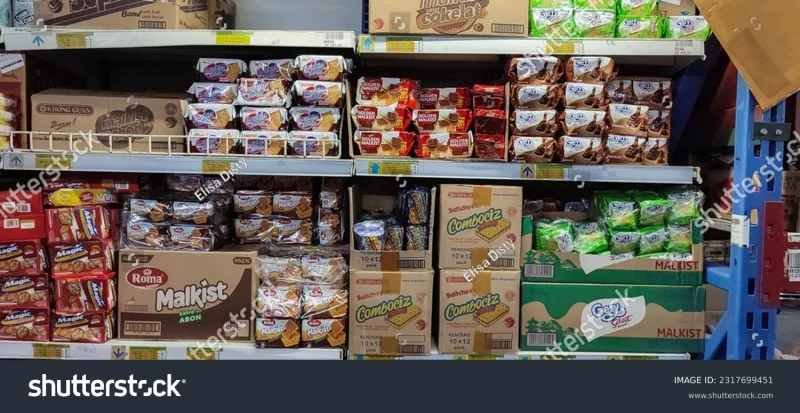
Photo: warehouse store snack aisle bulk packaged cookies, via www.shutterstock.com
Picture the scene: a shopper in suburban Ohio, standing in a warehouse store aisle roughly the width of a Tokyo train platform, staring at a box of beauty cookies the size of a microwave. Back home in Japan, the same product came in a package that fit in the palm of her hand — pastel, dainty, almost apologetic.
Welcome to the Americanization of the functional snack. It's a fascinating, occasionally hilarious case study in what happens when cute wellness culture collides with bulk-buy capitalism.
The Portion-Size Culture Clash
Let's start with the obvious. Japanese beauty supplements — cookies included — are built around restraint. One cookie. One serving. One little moment of self-care, wrapped in packaging that belongs on a shelf next to your favorite lip balm.
American retail operates on an entirely different logic: more is more, and the unit price better justify the membership fee. So when beauty snacks cross the Pacific, they get asked a question their creators never anticipated: can you sell me twelve of these at once?
The tension is real. A functional cookie isn't a family-size bag of tortilla chips — it's a dose. Scaling it up like a snack means people might treat it like one, which is exactly how a "beauty supplement" becomes just... cookies. Import shop owners we spoke with say this is the first thing they explain to curious American customers: this isn't a substitute for dessert. It's a dessert-shaped routine.
When the Recipe Crosses an Ocean
Here's where it gets genuinely interesting for the food-nerd crowd. Expat fans of Japanese beauty snacks have long noticed that US-market versions don't always taste identical to the originals.
Some of that is regulation — different ingredient standards, different labeling rules. Some of it is flavor calibration. American palates, on average, run sweeter and bolder. A subtle, barely-there soy-and-milk cookie that feels elegant in Shibuya can read as "bland" in Dallas, so reformulation happens.
The catch? Function and flavor live in a delicate balance. Functional ingredients like soy isoflavones have a presence — a slight bitterness, a texture contribution. Change the sugar, change the fat, change the bake, and you're not just tweaking taste. You're potentially changing what the product actually does. It's the snack equivalent of re-formulating a serum: technically the same product, spiritually something else.
Cute Doesn't Scale — It Translates
The other challenge is aesthetic. Japan's beauty snack culture is built on kawaii — the charm of the small, the precious, the giftable. American wellness culture speaks a different dialect: empowerment, protein counts, clean labels, "fuel."
The brands that survive the transition are the ones that translate rather than translate literally. The cookie stays a cookie. The ritual stays a ritual. But the story around it shifts from "this is a precious little treat" to "this is your one-smart-swap-a-day habit." Same product, new pitch.
And honestly? There's something to be said for the American version of the pitch. The idea that you don't need a 10-step supplement stack, just one intentional snack built into your day — that's a message that plays just as well in Chicago as it does in Osaka.
What We Lose (and Gain) in Bulk
The bulk-buy question cuts both ways. On one hand, buying a three-month supply makes it way easier to actually stick with a routine — consistency is the whole game with functional foods, and nobody's driving to a specialty import shop weekly for one tin.
On the other hand, something gets lost when the packaging stops being an experience. Part of the original magic was that the cookie felt like a tiny gift to yourself. A shrink-wrapped pallet of them feels more like... inventory.
The sweet spot, if you ask us, is a middle path: buy smart, but keep the ritual small. One cookie. One moment. Maybe a cute jar on your desk to keep it feeling like self-care rather than stocking up.
The Verdict on the Costco Test
So — would the beauty cookie survive in bulk? The answer, after talking to shop owners and longtime fans, is a cheerful yes-with-an-asterisk. Americans will absolutely buy functional cookies by the dozen. They just need the context that comes free in Japan: the cultural understanding that this is a daily ritual, not a snack haul.
The cute survives. It just learns to speak English.