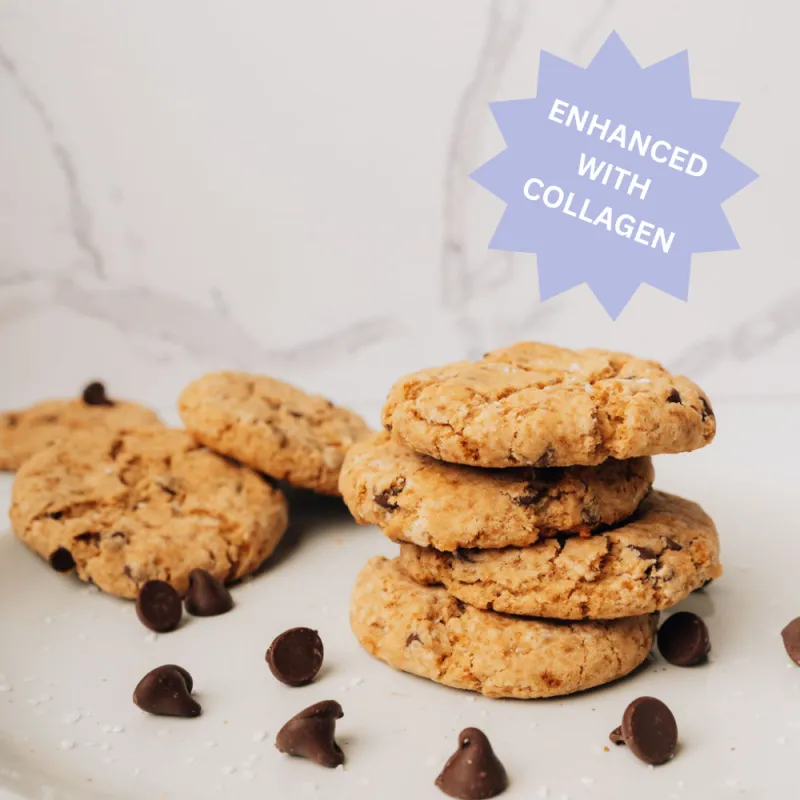
We Ate Beauty Cookies Every Day for a Month: 5 Friends, 1 Cookie Jar, Zero Filter

Photo: Bernard Gagnon, CC BY-SA 3.0, via Wikimedia Commons
Let's be honest: when one of us came back from a trip to Tokyo raving about cookies that supposedly do more than taste good, the group chat had questions. Lots of them. So we did what any curious friend group would do—we ran the experiment ourselves.
Five women. Thirty days. One shared cookie ritual built around Japan's famous F-Cup Cookies, the Pueraria mirifica-infused treats that have been quietly dominating Japanese drugstore shelves for years. We tracked everything: how they tasted, how we felt, whether anything changed, and whether we'd keep buying them with our own money.
Here's the unfiltered version.
The Setup: Rules of the Cookie Jar
The protocol was simple. One or two cookies a day, ideally with tea or coffee as an afternoon snack—basically how the product is enjoyed in Japan. No other changes to diet, skincare, or workouts. We each kept a short weekly diary and compared notes at the end.
The key ingredient, Pueraria mirifica, is a Thai herb sometimes called kwao krua, known for containing phytoestrogens—plant compounds that can mimic estrogen's shape in the body. It's the reason these cookies have their reputation, and it's also the reason we went in with raised eyebrows. Could a cookie really do anything beyond being, well, a cookie?
Week One: Honestly? It Just Felt Nice
The first thing we all noticed had nothing to do with results and everything to do with ritual.
"It sounds silly, but having a designated 'beauty snack' moment at 3 p.m. completely changed my afternoon," wrote Maya, 27. "I used to graze on whatever was in the office kitchen. Now I pause, make tea, and actually enjoy something."
Taste reviews were surprisingly consistent: mild, lightly sweet, a little like a shortbread-adjacent biscuit. Nobody hated them. Nobody thought they'd replace a bakery cookie either. As Dana, 31, put it: "It's a snack with a job, not a dessert. And that's fine."
Week Two and Three: The Confidence Question
Here's where things got interesting—not in our bodies, but in our heads.
Three of us reported feeling noticeably more confident by mid-experiment. Was it the phytoestrogens? Was it the act of doing something deliberate for ourselves every day? Was it placebo? Our honest answer: probably a mix, weighted heavily toward the psychology.
"I genuinely felt cuter eating these," admitted Priya, 29. "Whether that's marketing working on my brain or something real, I can't tell you. But I looked forward to it every single day, and that's not nothing."
One of us (looking at you, Renee) noticed mild bloating in week two, which resolved when she dropped from two cookies a day to one. Worth knowing if you're sensitive to soy or other plant estrogens.
What the Science Actually Says
We didn't want to write this without an adult in the room, so we ran our experience past the research. The short version: phytoestrogens from Pueraria mirifica have been studied for menopause symptom relief, and some small trials suggest effects on skin and breast tissue. But the research is limited, often uses creams or standardized extracts rather than cookies, and results are mixed.
A realistic framing from the literature: think subtle, think individual variation, and think no overnight miracles. Anyone promising dramatic changes from a snack is selling you a fantasy. What functional snacks can realistically deliver is a pleasant daily ritual, a modest dose of plant compounds, and—based on our group—a genuine mood lift from the self-care routine itself.
The Final Tally
After 30 days, here's our scorecard:
- Taste: 4/5 across the board. Pleasant, not decadent.
- Snack satisfaction: 5/5. The ritual was the real winner.
- Physical changes: Two of five noticed what they'd call subtle fullness; three noticed nothing measurable.
- Confidence/mood: Five of five. Unanimous.
- Would repurchase? Four of five yes—mostly for the ritual and the treat-with-benefits mentality.
Our Verdict: Manage Expectations, Enjoy the Moment
If you're expecting a cookie to rebuild your silhouette in a month, you'll be disappointed. If you're looking for a cute, low-stakes wellness ritual that makes your afternoon feel intentional—and might offer a little something extra—these earn their spot in the cookie jar.
The biggest lesson from our month wasn't about busts at all. It was that doing something small and kind for yourself, daily and without guilt, might be the most underrated beauty habit out there. The cookie is just the delivery vehicle.
Note: If you're pregnant, nursing, or have hormone-sensitive conditions, talk to your doctor before adding phytoestrogen-containing products to your routine.