Guilt Is So Last Season: How 'Functional Indulgence' Became America's Favorite Self-Care Move

Photo: Ashoka Jegroo, CC BY-SA 4.0, via Wikimedia Commons
Raise your hand if you've ever eaten a "bad" food and spent the rest of the day doing mental math to atone for it. Yeah. Us too.
Now raise your hand if you've recently seen a snack marketed with words like glow, collagen, or beauty benefits. Every hand up again? That's not a coincidence. We're living through a full-blown cultural pivot—from food as the enemy to food as the ally—and the playbook was written, like so many good things, in Japan.
From Restriction to Ritual
For decades, American diet culture ran on a simple, miserable equation: treats equal guilt. Snack ads promised indulgence while diet ads promised absolution, and women were expected to live in the tug-of-war between them.
Japan took a different route. Starting in the early 2000s, Japanese convenience stores and drugstores began stocking what locals call kinōsei snacks—functional foods infused with ingredients like collagen, hyaluronic acid, and Pueraria mirifica. The country's most famous example? F-Cup Cookies, the bust-enhancing biscuits that turned a supplement into something you'd genuinely look forward to eating.
The genius wasn't just the formulation. It was the framing: eat something cute, feel something good. No penance. No stairmaster as punishment. Just a small, joyful act of care wrapped in a cookie.
Why American Shoppers Are Eating It Up
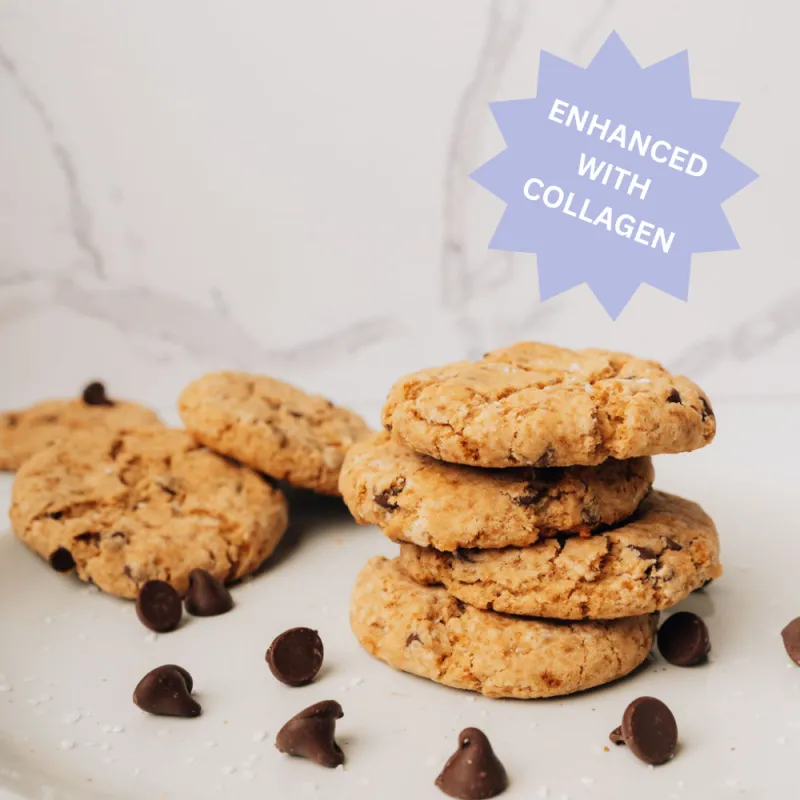
Fast-forward to today, and the US wellness aisle looks increasingly like a Tokyo drugstore. Collagen gummies at Target. Adaptogenic chocolates at Erewhon. Beauty lattes, skin-supporting sodas, and yes—functional cookies—landing in Whole Foods and Sephora alike.
The psychology here is worth unpacking. Traditional dieting frames self-care as withholding. Functional indulgence frames it as adding—adding collagen, adding ritual, adding a moment of pleasure that supposedly works for you while you enjoy it. For a generation raised on restrictive messaging, that flip is genuinely liberating. A 3 p.m. cookie stops being a failure and becomes a practice.
There's also the aesthetic pull. Japanese beauty snacks are cute—individually wrapped, pastel-packaged, designed to be photographed. In an Instagram economy, the packaging isn't an afterthought; it's half the product.
The Savvy Shopper's Reality Check
Now for the part we'd be doing you a disservice to skip: functional snacks are still, fundamentally, a marketing category. And marketing categories deserve a raised eyebrow.
A few tools for shopping smart:
- Check the dose, not the buzzword. A sprinkle of collagen in a cookie is not the same as a studied dose. If a product doesn't disclose how much of the hero ingredient you're actually getting, temper your expectations accordingly.
- Know your ingredients. Phytoestrogens like Pueraria mirifica, collagen peptides, and hyaluronic acid all have real research behind them—but often in specific forms, doses, or delivery methods. A supplement snack is a bonus, not a treatment.
- Beware the halo effect. "Functional" doesn't mean "unlimited." A beauty cookie is still a cookie, and ten of them a day is ten cookies with a marketing degree.
- Ask what you're actually buying. Sometimes the honest answer is: a pleasant ritual with a possible bonus. That can still be worth it! Just know which part you're paying for.
So Is It Empowerment or Advertising?
Honestly? It's both, and pretending otherwise does nobody any favors.
The empowerment is real: choosing a treat that makes you feel cared for, without the shame spiral, is a genuinely healthier relationship with food than most of us grew up with. The advertising is also real: companies have learned that selling you self-love is more profitable than selling you self-restraint, and they will happily package your insecurities in pastel foil if you let them.
The sweet spot—and we mean that literally—is enjoying these products for what they reliably deliver: a moment of delight, a small daily ritual, a treat that fits your values. Any beauty benefits are a potential bonus, best enjoyed with curiosity rather than desperation.
The Bottom Line
Functional indulgence isn't going anywhere, and we're not mad about it. A world where snacks are allowed to be joyful and purposeful beats a world of dry rice cakes and regret every time.
Just walk into it with open eyes and a full heart. Buy the cute cookie. Savor it with your afternoon tea. Feel good about the ritual. And save the skepticism for anyone who promises the cookie will change your life.
The cookie's job is to be a lovely moment in your day. Everything else is a bonus round.