Baked In, Not Swallowed: What Actually Happens to Functional Ingredients Inside a Cookie
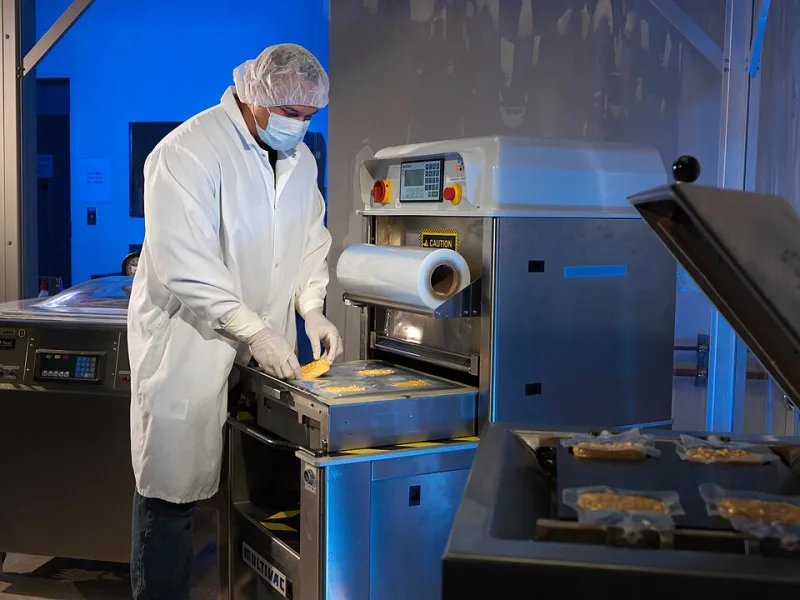
Photo: Bill Stafford, Public domain, via Wikimedia Commons
Let's be real: most of us would rather eat a cookie than swallow a capsule. That's the entire pitch behind functional snacks—wellness ingredients hiding inside something you'd actually enjoy. But it raises a fair question that the packaging doesn't always answer: when you bake an active ingredient into a cookie, does it still work?
We spoke with Dr. Rachel Nguyen, a food scientist who has formulated functional snacks for consumer brands, to get past the marketing and into the actual chemistry.
First, the Big Question: Does Heat Destroy Everything?
"Heat is the first thing people worry about, and it's a legitimate concern—but it's ingredient-specific," Dr. Nguyen explains. "Some compounds are surprisingly heat-stable. Others degrade significantly. The oven doesn't treat everything equally."
Here's the rough breakdown:
- Isoflavones (plant compounds found in soy and kudzu root) are moderately heat-stable. "They can survive baking temps, though some conversion happens," she says. "The bigger variable is how long and how hot the bake is."
- Pueraria mirifica, the herb most associated with bust-enhancement snacks, contains its own family of phytoestrogens called miroestrols. "These are more delicate. Whether they survive a full bake depends heavily on the formulation and process—and honestly, this is where independent testing is thin on the ground."
- Collagen doesn't "break" in heat the way people fear—heat actually denatures it into smaller peptides, which is how bone broth works. "Denatured collagen peptides are still absorbable. The amino acids don't disappear."
Bioavailability: The Word Brands Love and Rarely Explain
Bioavailability just means how much of an ingested compound actually makes it into your bloodstream in a usable form. And here's where cookies have a genuine, if surprising, advantage in some cases.
"Fat-soluble compounds absorb better alongside fat," Dr. Nguyen notes. "A cookie contains butter or oil, so certain phytoestrogens and fat-soluble vitamins may actually be absorbed more efficiently than on an empty stomach with a pill."
On the flip side, pills often deliver precise, standardized doses. Cookies vary batch to batch. "With a supplement capsule, you know you're getting 50 milligrams. With a cookie, the label says what was added to the dough—what ends up in your body after baking and digestion is less certain unless the manufacturer tests the finished product."
That's the nuance most marketing skips.
What to Look For on a Label
Dr. Nguyen's checklist for evaluating any functional snack:
- Does the label state the amount? Vague phrases like "boosted with collagen" without a milligram figure are a yellow flag.
- Is the ingredient added post-bake or in the dough? Coating or filling applications protect heat-sensitive compounds better.
- Third-party testing? Independent lab verification of finished products is the gold standard and still rare in this category.
- Realistic claims. "Supports" language is legally required for a reason—no cookie is a pharmaceutical.
A Beginner's Glossary
- Phytoestrogen: A plant compound that weakly mimics estrogen in the body. Isoflavones and miroestrols are examples.
- Pueraria mirifica: An herb from Thailand, related to kudzu, used in beauty supplements.
- Collagen peptides: Small protein fragments from broken-down collagen, easier for the body to absorb.
- Bioavailability: The proportion of a nutrient that actually reaches your circulation and can be used.
- Standardized extract: An ingredient processed so each batch contains a consistent amount of the active compound.
The Honest Bottom Line
Dr. Nguyen's take is refreshingly un-hyped: "Functional cookies are a delivery format, not a magic trick. Some ingredients hold up well in a bake, some don't, and the dose matters more than the format. If eating a cookie helps someone take a supplement consistently, that consistency is genuinely valuable—but it shouldn't come with inflated expectations."
In other words: the cookie is real, the chemistry is real, and the results depend on formulation quality, dose, and your own body. Enjoy the glow, read the label, and save the miracle talk for the marketing team.