I Asked Food Scientists If Functional Cookies Actually Work. The Answer Was More Interesting Than I Expected.
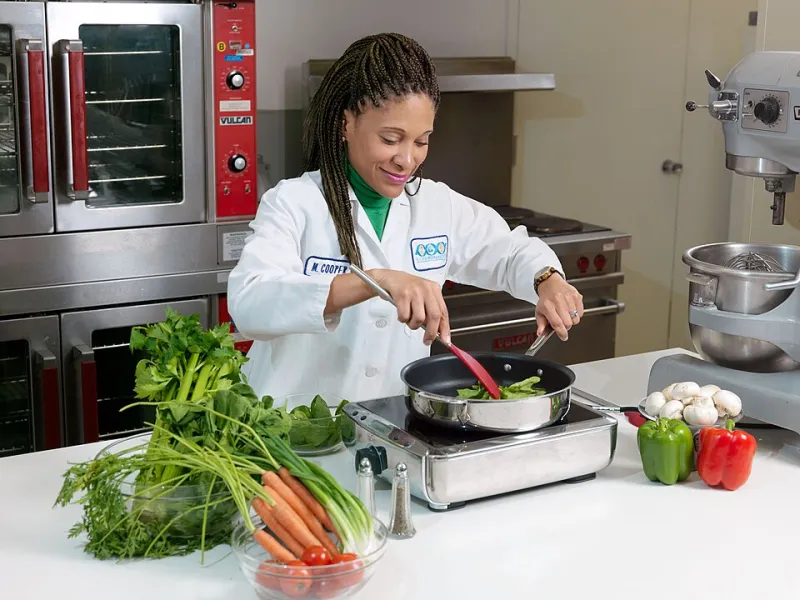
Photo: Robert Markowitz, Public domain, via Wikimedia Commons
Let's start with the claim that made me raise an eyebrow in the first place: a cookie that does something beyond tasting good. Specifically, F-Cup Cookies — the Japanese import that's been quietly taking over American wellness TikTok — which contain pueraria mirifica, an herb traditionally used in Thailand and Japan and marketed for, among other things, bust enhancement.
My background is in food writing, not biochemistry, but I've been around the functional food block enough times to know that "ingredient X is in the product" and "ingredient X does anything" are two very different statements. So I did what any curious skeptic would do: I called people smarter than me.
First Problem: The Oven
"Heat is the first filter," a food scientist who develops functional baked goods for a living told me (she asked not to be named because, quote, "the supplement Twitter mob comes for everyone"). "Some compounds are remarkably stable through baking. Others degrade at temperatures as low as 150°F. It's molecule-by-molecule, and there's no shortcut answer."
Pueraria mirifica's active compounds are phytoestrogens — plant-derived molecules structurally similar to estrogen, chiefly miroestrol and deoxymiroestrol. According to published research on the raw herb, these compounds are unusually potent as far as phytoestrogens go. What's less documented is their thermal stability in a cookie matrix. Some older Japanese and Thai studies suggest the dried root powder retains activity through moderate processing, but a peer-reviewed paper specifically on, say, miroestrol survival at 350°F for 12 minutes in dough? Hard to find.
"That's not necessarily damning," the food scientist added. "It's just the honest state of the literature. A lot of traditional herbal use involves preparation with heat — decoctions, for instance — and the compounds were presumably active through those methods too."
Second Problem: Your Digestive System
Assuming the compounds survive baking, they then face the gauntlet of digestion: stomach acid, enzymes, and the liver's first-pass metabolism, which is famously good at neutralizing things.
A cosmetics and supplement researcher I spoke with put it this way: "Phytoestrogens like those in soy are absorbed orally — that's well established. The question with any specific herb is dose and bioavailability. A cookie containing a few hundred milligrams of root extract is not the same as a standardized capsule, and consumers should understand that difference."
Which is a fair point. If you're expecting capsule-grade potency from a snack, you may be setting yourself up for disappointment. If you're treating the cookie as a pleasant daily ritual that might carry some functional benefit — well, that's a different expectation entirely.
The Part Nobody Wants to Say Out Loud
Here's my honest takeaway after weeks of reading and asking: the mechanism isn't fantasy. Phytoestrogens are real, they do bind estrogen receptors, and pueraria mirifica is among the more studied (though still under-studied) botanicals in this space. But the leap from "compound exists in cookie" to "guaranteed physical results" involves multiple points of uncertainty — heat stability, dosage, individual biology — that no marketing copy can honestly erase.
What surprised me most was that the researchers I spoke with weren't hostile to the category. One put it perfectly: "A woman eating a cookie with a plant extract in it is having a better wellness experience than a woman choking down a chalky capsule she resents. Adherence matters. Enjoyment matters. If the snack is the delivery system that makes someone consistent, that's not nothing."
How to Be a Smart Skeptic (Not a Cynic)
If you're going to try functional cookies, do it with your eyes open:
- Read the actual ingredient list, not just the front of the tin. Look for standardized extracts and honest dosing.
- Manage expectations. Think of it as a ritual with a possible bonus, not a pharmaceutical.
- Talk to your doctor if you have any hormone-sensitive conditions, are pregnant, or take medications — phytoestrogens are biologically active, full stop.
- Give it time and track how you feel, not just how you look.
The Verdict
Can a snack really do that? The most truthful answer is: sometimes, maybe, partially — and the industry would be better served by saying so. What I came away with isn't a debunking or an endorsement. It's respect for a category that makes wellness feel like dessert, and a gentle reminder that the most functional ingredient in any cookie is the moment of joy you get eating it. The rest? Worth watching, worth researching, and worth enjoying with a healthy scoop of skepticism.
Preferably with milk.